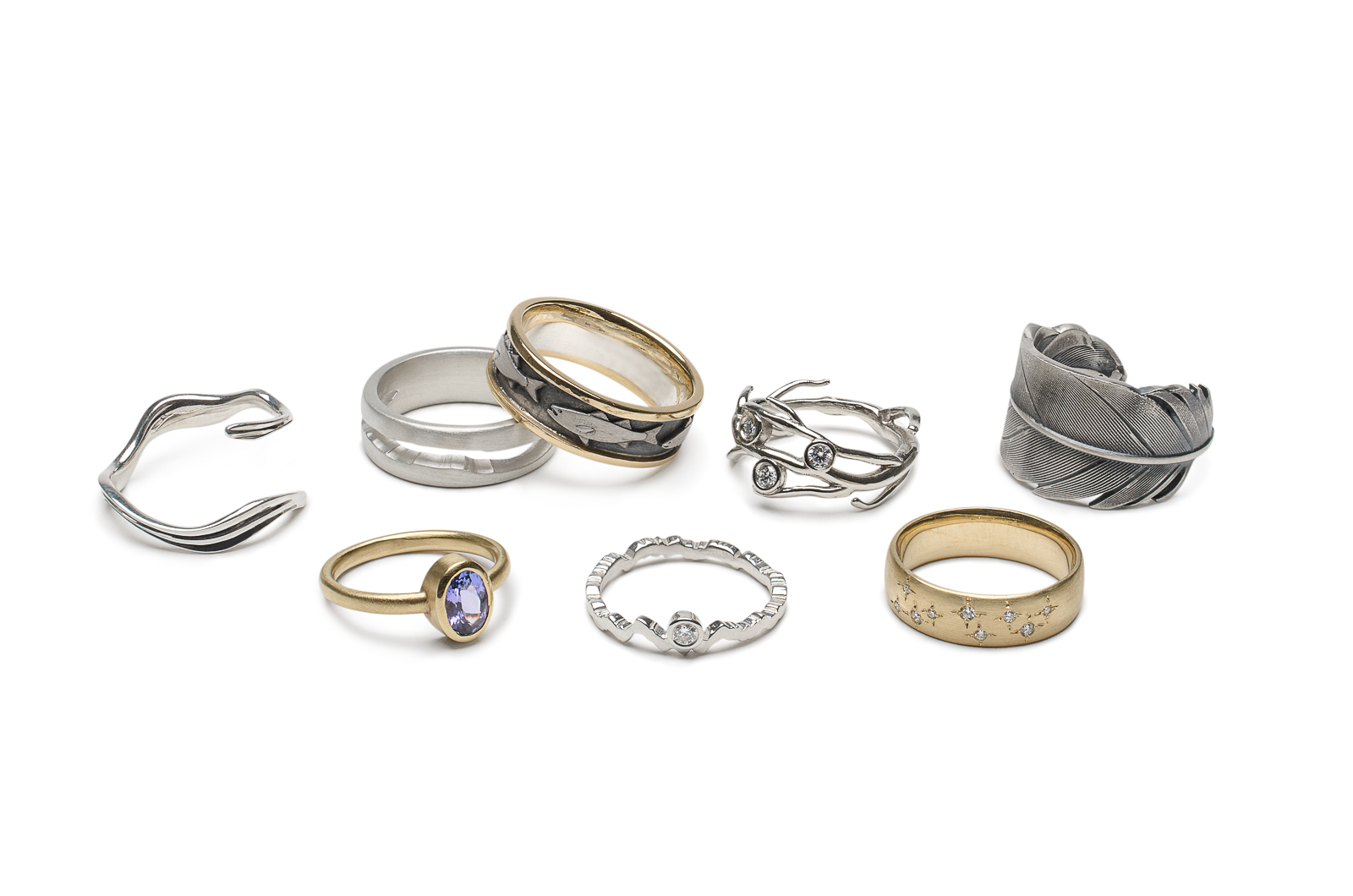
Why Your Metal Choice Matters
When selecting an engagement or wedding band, choosing the right metal for your engagement or wedding band is just as important as the design or gemstone. Your metal affects not only the look but also the durability, comfort, and long-term wearability of your ring. From the bright gleam of sterling silver to the enduring strength of platinum, understanding the differences helps you pick a band that will last a lifetime.
Sterling Silver: Affordable and Timeless
While less common for engagement bands, sterling silver offers an elegant, bright option at a more accessible price point.
Pros:
- Affordable and versatile
- Can be polished to restore shine
- Works well for detailed designs
Cons:
- Softer than gold or platinum; may scratch with daily wear
- Can tarnish over time
Allergen info: Contains a small amount of copper, usually safe for sensitive skin.
14K Gold: Durable and Everyday-Friendly
14k gold is ideal for engagement and wedding bands because it balances beauty and strength.
Pros:
- Harder and more durable than 18k gold or silver
- Available in yellow, rose, and white gold
- Excellent for everyday wear
Cons:
- White gold may contain nickel (consider palladium alloy if sensitive)
- Slightly less rich color than 18k gold
Allergen info: Palladium white gold is recommended for nickel-sensitive wearers.
18K Gold: Luxurious and Rich in Color
18k gold is warmer in tone and ideal for those seeking a rich, traditional gold look.
Pros:
- Deep, saturated color
- Naturally resistant to tarnish
- Classic, heirloom-quality appearance
Cons:
- Softer and more prone to scratches than 14k
- Higher cost due to higher gold content
Allergen info: 18k yellow or rose gold is generally safe; white gold with nickel can cause reactions.
Palladium White Gold: Hypoallergenic Option
Palladium white gold is excellent for those who love white gold but need a nickel-free, hypoallergenic band.
Pros:
- Naturally bright white tone
- Durable and scratch-resistant
- Hypoallergenic
Cons:
- Higher cost than standard white gold
- Slightly less widely available
Allergen info: Ideal for sensitive skin.
Platinum: Enduring and Hypoallergenic
Platinum is the ultimate choice for engagement and wedding bands — extremely durable and hypoallergenic.
Pros:
- Naturally white and bright
- Very dense and durable; can last generations
- Hypoallergenic and low maintenance
Cons:
- Heavier and more expensive
- Develops a soft patina over time (which many find beautiful)
Allergen info: Completely hypoallergenic.
Choosing What’s Right for Your Band
When choosing the right metal for your engagement or wedding band, consider:
- Daily wear: Harder metals like platinum or 14k gold handle daily life best.
- Style preference: Warm yellow, pink, or cool white metals — pick what suits your style and gemstone.
- Allergies: If nickel-sensitive, choose palladium white gold, yellow gold, or platinum.
- Budget: Silver is accessible; gold is mid-tier; platinum is a premium investment.
Learn more about metals and customization on our Jewelry Options page.
Work With a Jeweler Who Understands Your Needs
Choosing the right metal for your engagement or wedding band isn’t just about aesthetics — it’s about creating a piece that will last a lifetime. At Courtney Reckord Jewelry, we help guide you through each option, considering durability, comfort, color, and skin sensitivity. Every ring is made to order, one at a time, in Vermont.
Check out our Google Business Profile to learn more and see client reviews.
Final Thoughts
From sterling silver to platinum, your engagement or wedding band’s metal sets the foundation for a piece that lasts a lifetime. By weighing color, durability, comfort, and allergies, you can select a metal that matches your lifestyle and your story.
👉 Explore metal and gemstone options for your custom engagement and wedding bands